
SIBO Diet: What to Eat, What to Avoid, and Why It Matters
When you have SIBO, eating can stop feeling simple. Foods that once felt normal may suddenly leave you bloated, uncomfortable, or overly full, and it can become hard to predict what your body will tolerate from one day to the next. Over time, that unpredictability can make meals feel stressful and frustrating.
A SIBO diet won’t fix the overgrowth on its own, but it can help you spot which foods aggravate your symptoms and bring some consistency back to your day while you and your provider look at what’s driving it.
What Is a SIBO Diet?
SIBO stands for small intestinal bacterial overgrowth. It happens when an excessive amount of bacteria develops in the small intestine, where bacterial levels are normally much lower than they are in the colon.
Those bacteria can ferment certain carbohydrates before the body has fully absorbed them. That fermentation may contribute to common SIBO symptoms, including bloating, gas, abdominal pain, diarrhea, constipation, and feeling full after eating only a small amount.
A SIBO diet temporarily reduces foods that are more likely to ferment in the digestive tract. This may help calm symptoms while a patient and provider work on the underlying causes of the overgrowth.
There is no universal SIBO diet as it should be tailored to each individual depending on their symptoms, tolerance of different foods, nutrition, medical history, and treatment course.
Can Food Cause SIBO?
The food we eat does not normally lead to SIBO.
However, some types of food may cause symptoms in a person suffering from SIBO. Eating food made up of fermentable carbohydrates might lead to bloating due to bacteria found in the small intestines that easily digest such food items.
That’s the distinction worth holding onto: changing your diet can ease the symptoms, but it isn’t treating the cause. Diet manages the discomfort; it doesn’t solve the underlying problem
Common SIBO Symptoms That May Change With Diet
SIBO symptoms can vary considerably from one person to another. They may also change depending on what you eat, how much you eat, and how active your symptoms are.
Common symptoms include:
- Bloating that becomes more noticeable later in the day
- Gas or abdominal pressure
- Diarrhea, constipation, or alternating between both
- Feeling unusually full after a small meal
- New or unpredictable food sensitivities
- Nausea or reduced appetite
- Fatigue or brain fog that seems connected to digestion
When symptoms are inconsistent, it can become difficult to tell which foods are actually causing a reaction. That is one reason a structured SIBO diet may be more helpful than randomly removing foods.

The Low-FODMAP Diet for SIBO
The low-FODMAP diet is one of the most common dietary approaches used to manage SIBO symptoms.
FODMAP stands for fermentable oligosaccharides, disaccharides, monosaccharides, and polyols. These are types of carbohydrates that may be poorly absorbed in the digestive tract and more easily fermented by bacteria.
For some people, temporarily reducing high-FODMAP foods can ease bloating, gas, bowel changes, and abdominal discomfort.
Foods commonly limited during the initial phase of a low-FODMAP diet may include:
- Onions and garlic
- Beans and lentils
- Some wheat-based foods
- Certain fruits, including apples, pears, and stone fruits
- Certain dairy products
- Sugar alcohols such as sorbitol and mannitol
The low-FODMAP diet is usually meant to be a temporary solution. Foods are slowly reintroduced to understand which ones cause problems and which ones can be consumed safely.
What to Eat With SIBO
There’s no universal list of best foods here; one person tolerates a meal fine while another reacts to the exact same thing.
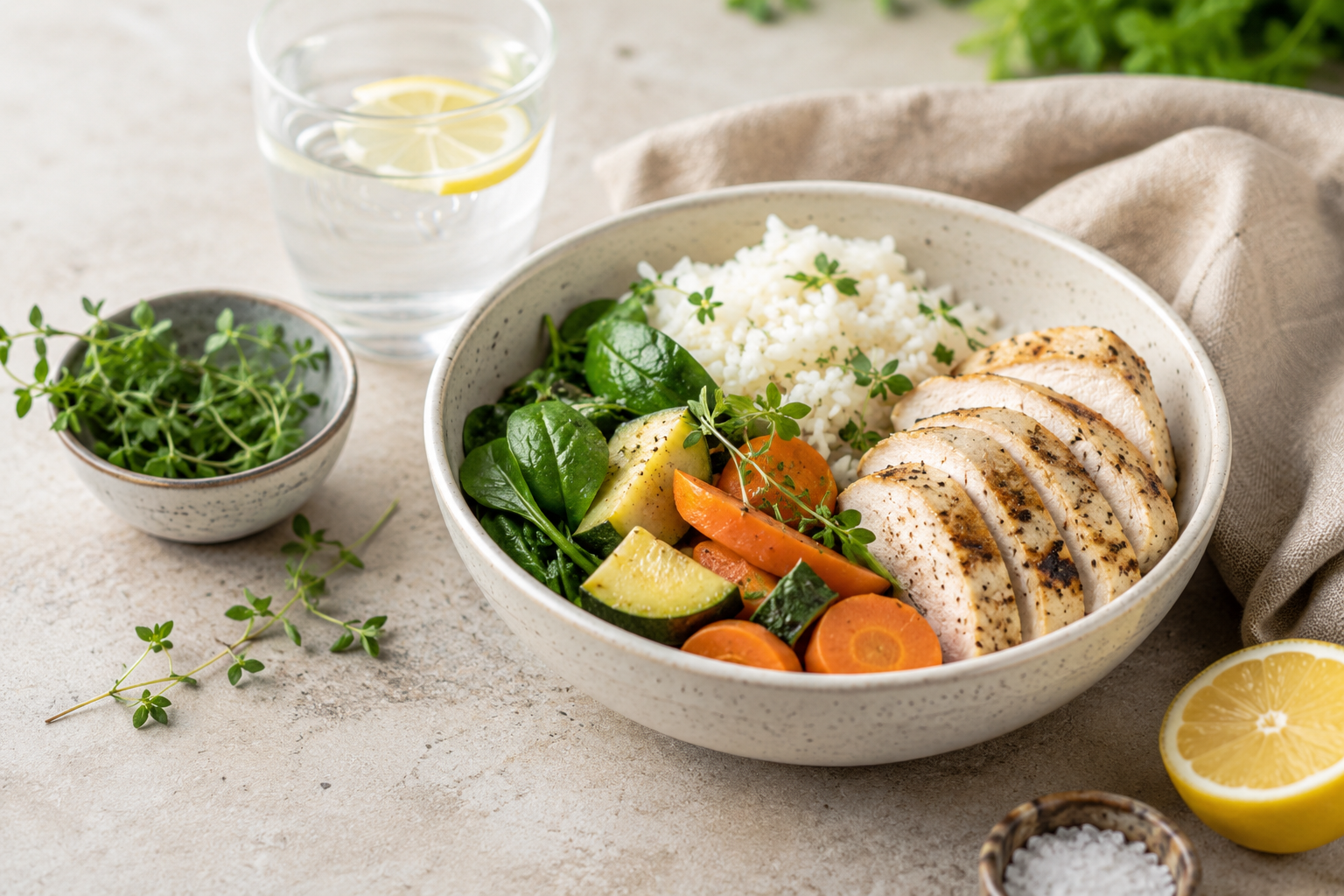
However, most SIBO patients benefit from simple, moderate meals containing foods that are easier for their body to digest.
Depending on individual tolerance, that may include:
- Eggs, poultry, fish, or other simple proteins
- Firm tofu or other tolerated plant-based proteins
- Cooked vegetables instead of large amounts of raw vegetables
- Rice, potatoes, oats, or other tolerated starches
- Lower-FODMAP fruits in moderate portions
- Lactose-free dairy products when appropriate
- Olive oil, avocado oil, and other simple fats
Portion size also matters. A food that feels comfortable in a small amount may cause symptoms in a much larger serving.
Many people with SIBO find that moderate meals are easier to tolerate than very large or heavy meals. Your provider may also discuss meal timing based on your symptoms, digestion, and motility.
Foods to Avoid With SIBO
The phrase “foods to avoid with SIBO” can be misleading because there is no single list that applies to every patient. We want to identify which foods are contributing to your symptoms right now.
Foods that commonly cause difficulty during an active SIBO flare may include:
- Onions and garlic
- Beans and some legumes
- Large amounts of wheat
- High-FODMAP fruits
- Certain dairy products
- Sugar alcohols and artificial sweeteners
- Highly processed foods
- Very large meals
Some people may also have difficulty with certain high-fiber foods, cruciferous vegetables, or rich meals.
That does not necessarily mean those foods need to disappear from your diet permanently. It may simply mean they are harder to tolerate while your digestive system is under stress.
Why a SIBO Diet Should Not Last Forever
One of the biggest concerns with a SIBO diet is staying overly restricted for too long.
When a patient finally finds a group of foods that does not trigger symptoms, it is understandable to keep eating only those foods. The problem is that a very limited diet can eventually make it harder to meet nutritional needs and maintain enough variety.
It can also make eating feel increasingly stressful.
A thoughtful SIBO diet usually moves through several stages:
- Temporarily reduce foods that appear to trigger symptoms.
- Give the digestive system time to settle.
- Reintroduce foods in a structured way.
- Build back toward the broadest diet you can comfortably tolerate.
This approach should help you eat with more comfort, variety, and confidence, without relying on permanent restriction.
Is a SIBO Diet Enough to Treat SIBO?
Diet may reduce bloating, gas, and discomfort, but it does not necessarily address the underlying cause of SIBO.
SIBO can be connected to several different issues, including impaired intestinal motility, previous abdominal surgery, structural changes, certain medical conditions, or changes within the gut microbiome.
If those factors are not addressed, symptoms may return even after a period of improvement.
This is why some people feel better while following a very restricted diet but experience the same symptoms as soon as they begin eating more normally again.
The food was controlling the symptoms. It was not correcting the reason the symptoms were happening.
Other Diet Approaches Used for SIBO
Low-FODMAP isn’t the only option. Some people do better on a modified low-carbohydrate plan or another personalized elimination approach, and in more specific cases, a provider may recommend an elemental diet, a medically supervised liquid nutrition plan built to be easily absorbed. It’s highly restrictive and specialized, so it’s not something to attempt without clinical guidance.
Going more restrictive isn’t automatically more effective. The better goal is the least restrictive approach that still controls symptoms and meets your nutritional needs.
Why SIBO Symptoms Often Come Back
Recurring symptoms are often a sign that bacterial overgrowth is only part of the picture. Motility problems, malnutrition, stress, anatomical factors, and other diseases of the digestive tract continue to interfere with the proper work of the digestive system; in this case, an individualized approach works better than the removal of foods from the list.
How Terrain Health Approaches a SIBO Diet
When it comes to a SIBO diet at Terrain Health, we will not simply provide you with a list of foods and expect you to manage everything else yourself.
We look at what you are eating, how your symptoms respond, what your digestion has been like over time, and what may be contributing to the bacterial overgrowth.
Your strategy could involve finding potential triggers, modifying your diet based on your symptoms, making sure you have proper nutrition, and developing a reintroduction strategy.
There is more to it than just the foods that you eat.
If SIBO keeps returning, we want to understand what may be interfering with motility, digestion, nutrient absorption, or the balance of the gut microbiome.
This approach is meant to help you move toward better digestion and a more flexible way of eating, rather than keeping you on a SIBO diet indefinitely.
A More Practical Way to Eat With SIBO
The ideal SIBO diet should be a process that makes eating easier to understand rather than fear.
You should understand why certain foods are being limited, how long the elimination phase may last, and what the plan is for adding foods back.
You should also have support when symptoms do not follow the rules. Because sometimes they will not.
Digestive symptoms are rarely as simple as one food being good and another being bad. The right plan considers your symptoms, your health history, your nutritional needs, and how you actually live.
Get Personalized Support for SIBO Symptoms
When bloating, food sensitivities, or any other digestive issues are making your meals challenging, you shouldn’t keep speculating on your own anymore.
Terrain Health can help you understand how food may be affecting your SIBO symptoms while also looking at the larger factors influencing your gut health.
Book a Discovery Call today to learn more about personalized SIBO support and what a more thoughtful treatment plan could look like.
About Dr. Robin Rose
Dr. Robin Rose is a board-certified gastroenterologist and internal medicine physician and the founder of Terrain Health. She specializes in root-cause, precision medicine using advanced biomarker testing, microbiome analysis, and personalized treatment protocols to optimize health and longevity.